The previous blog mapped how extreme heat in India has evolved from sporadic crises to a growing policy priority, spurring Heat Action Plans (HAPs) and prompting the National Disaster Management Authority (NDMA) to mandate multi-sector coordination. From Ahmedabad’s trailblazing 2013 model to the subsequent proliferation of locally developed HAPs across states, districts, and cities as of 2026, the growing presence of HAPs merits closer scrutiny of their structure. The plans lean on shared national and public health templates, yet diverge in scope and setup, sculpting how heat risk is interpreted and managed.
This blog assesses the characteristics of the municipal HAPs of Ahmedabad, Bhubaneswar, Churu, Delhi, Surat, Thane, and Varanasi. It then focuses on Delhi, where high heat exposure levels[1] have driven the development of one of the few formal[2] HAPs among India’s major metropolitan cities, and examines how these characteristics play out in the high-stakes, recently updated plan.
What is an ideal heat action plan?
The NDMA HAP guidelines (2017; updated 2019) refer to international research and initiatives such as EuroHEAT,[3] PHEWE,[4] and cCASHh.[5] However, the guidelines do not adopt any single international framework as a codified standard. This allows states and cities the flexibility to draw from international experiences while adapting plans to local conditions.
Figure 1 compares these international frameworks with the NDMA’s guidelines to highlight where they broadly align on the core elements of heat management.
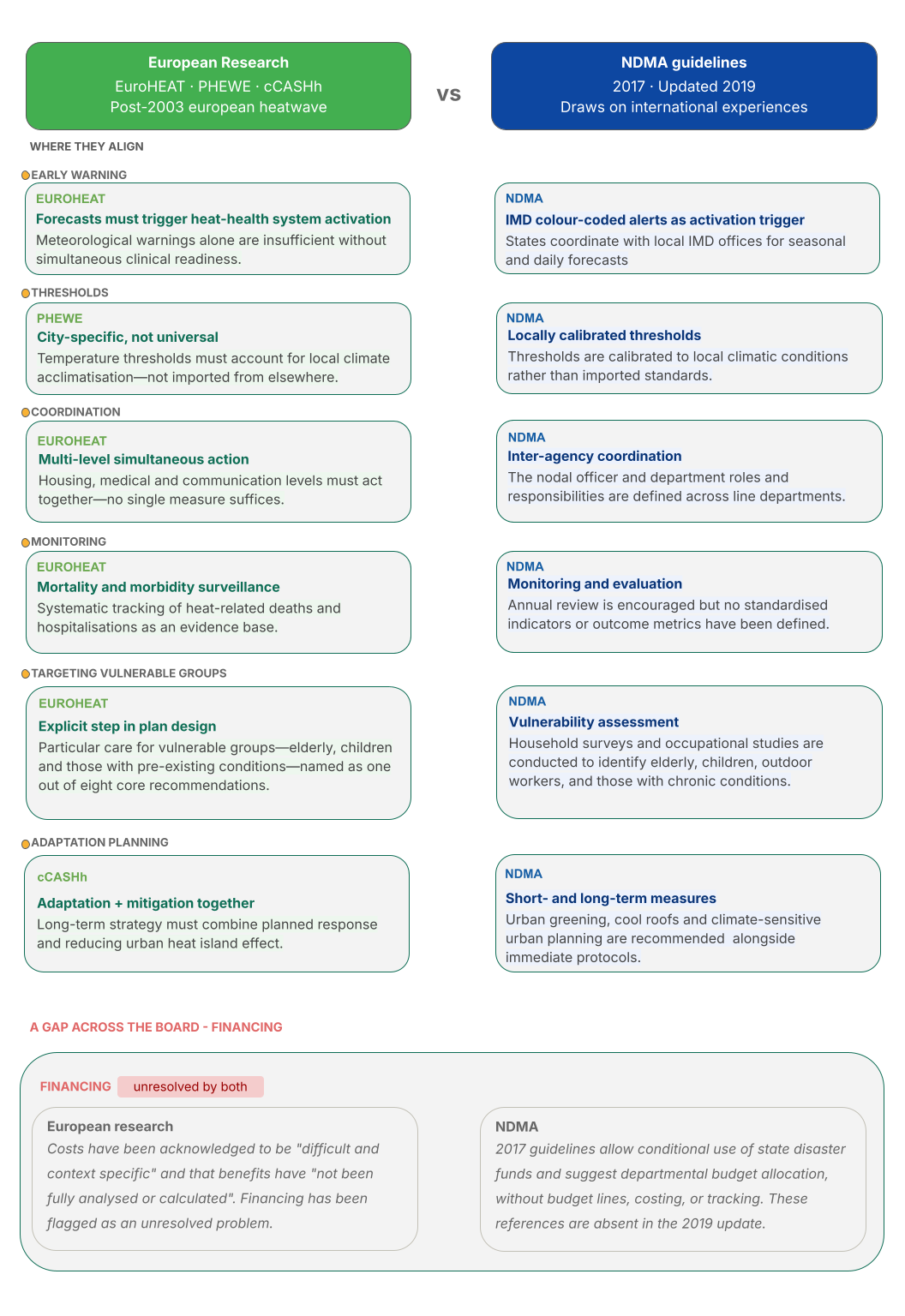 Figure 1. A comparison of international research and Indian national guidelines
Note: Recent international discourse on HAPs can be found in reports and gap assessments rather than in a single standardised framework. Publications such as the World Health Organization’s (WHO) Heat and Health in the WHO European Region (2021) and the United Nations Office for Disaster Risk Reduction’s (UNDRR) Extreme Heat Risk Governance Framework and Toolkit (2025) emphasise establishing leadership accountability, built-in surveillance, evaluation systems, and dedicated financing pathways, including earmarked and trackable funding, sustained multi-year investment in heat resilience, and equity-centred targeting of vulnerable populations. Source: EuroHEAT (WHO Europe, 2008); PHEWE (ClimaHealth, 2007); cCASHh (cCASHh study, 2004)); NDMA guidelines (2017; 2019)
Figure 1 reveals that financing is a blind spot in heat action planning. The NDMA guidelines suggest pooling existing disaster funds, but skip explicit mechanisms such as creating dedicated budget lines or spending trackers. The guidelines merely tag existing disaster funds, reflecting a tendency to treat heat as a disaster to respond to, rather than a long-term risk requiring sustained investment.
Selection of cities
Based on the alignment of European research[6] and NDMA guidelines, selected city HAPs are examined across early warning systems, institutional partnerships, monitoring, targeting of vulnerable groups, adaptation planning, and financial articulation.
For brevity, this blog focuses on a small set of HAPs. The cities examined in this blog were selected in stages, starting with urban areas located in districts with high or very high heat risk,[7] and then within these, cities with formal HAPs were chosen—Ahmedabad (2019),[8] Surat (2023),[9] Thane (2024),[10] Bhubaneswar (2020),[11] and Varanasi (2025).[12]
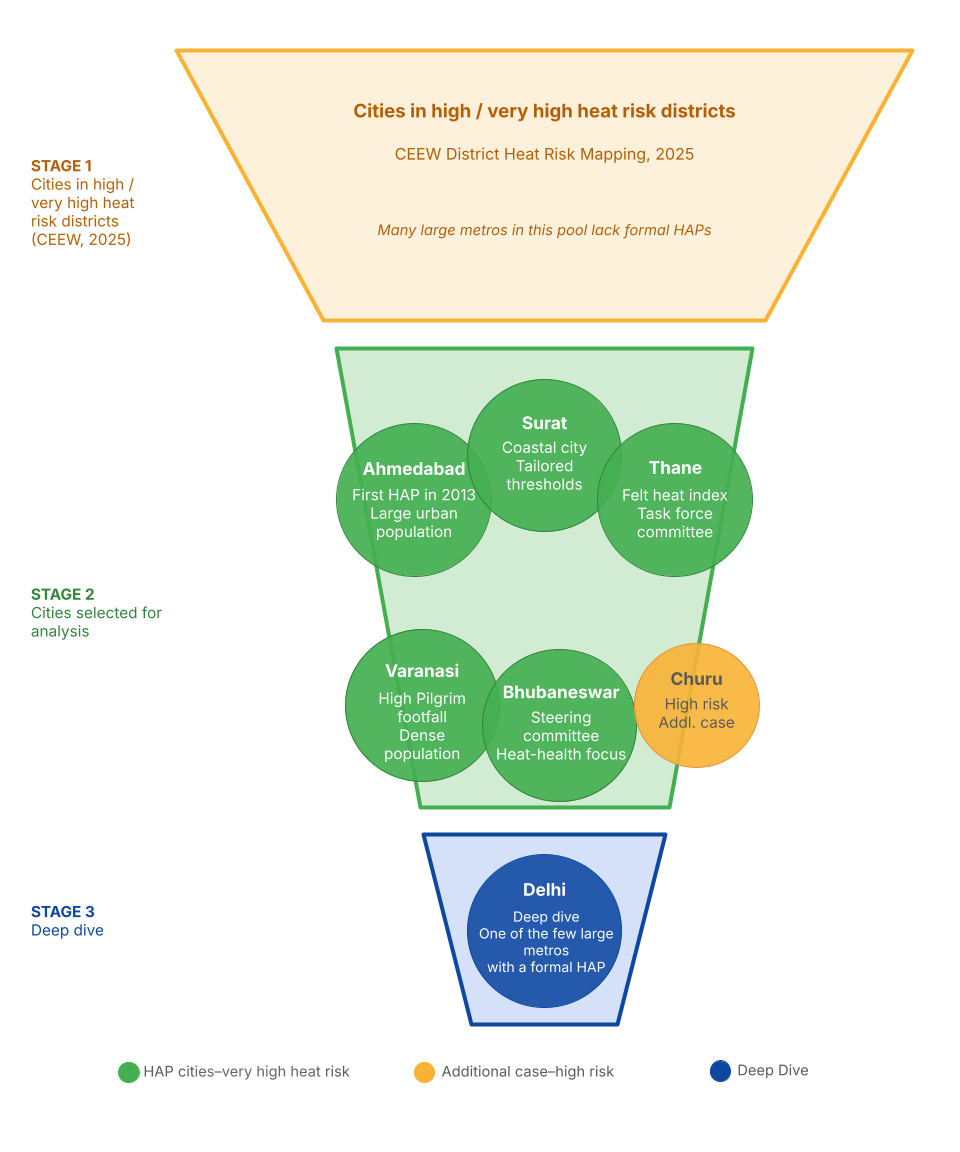
Figure 2. The selection process for the cities examined in this analysis
Source: Author’s analysis based on CEEW (2025) and publicly available HAPs.
Churu (2025)[13] has also been included because of its distinct administrative features. Delhi is considered separately, as it is one of the few large metropolitan cities with a formal HAP, despite several major metros facing similar levels of heat exposure.[14]
Comparing heat action plans across selected cities
Our analysis indicates that most HAPs converge on early warning systems, vulnerability mapping, and inter-agency coordination (Review). Specific observations are highlighted below.
Observation 1: Commonalities in institutional coordination
All HAPs identify a nodal authority and coordination mechanisms across municipal, disaster management, and line departments. Interestingly, Thane’s plan (2024) establishes a dedicated Heat Wave Task Force Committee, while Bhubaneswar’s plan (2020) recommends establishing a steering committee to manage medical emergency responses during the heat season.
Observation 2: Early warning systems are mostly consistent across heat action plans
Forecasts from the India Meteorological Department (IMD) and colour-coded heat alerts serve as the primary signals for activating response measures. However, in some cases,[15] alerts are combined with locally established thresholds, tailored to geography and administrative needs.
Observation 3: Monitoring and evaluation mechanisms
Operational details are most developed in the areas of health system preparedness and risk communication. Most HAPs cover the essentials, such as hospital readiness, surveillance of illness and death, and emergency coordination. Cities then aim to review the effectiveness of their plans using the collected health data, but monitoring styles vary.[16]
Observation 4: Methods to identify vulnerable populations vary
All the chosen cities recognise vulnerable groups, such as outdoor workers, slum residents, elderly populations, and low-income communities. However, the process used to identify such groups varies across plans. All cities (Ahmedabad, Bhubaneswar, Varanasi, Surat, Thane, and Churu) use ward-level vulnerability mapping.
Observation 5: Adaptation strategies show less variation across cities
Many plans focus on preparedness (early warning systems, health facilities, and communication) alongside long-term heat mitigation through cool roofs, urban greening, shaded public spaces, and improved building design. Implementation of these longer-range efforts, however, depends on each city’s specific context. [17]
Observation 6: Most plans assume implementation financing can be generated through programme convergence
A few of the plans have set aside dedicated heat budgets. However, most cities expect to fold the heat budget into their regular municipal pots and ongoing schemes. Ahmedabad’s Cool Roof initiative draws funding from the city’s municipal corporation, the Pradham Mantri Awas Yojana (Urban), and external partners. Surat and Varanasi aim to accommodate heat measures within departmental budgets and disaster funds. It is reported that the Thane Municipal Corporation has committed INR 1 crore from municipal funds for heat-resilience measures. Bhubaneswar estimates it will require INR 500–700 crore in long-term investments in cooling infrastructure, greening, and water restoration, primarily tapping into the Atal Mission for Rejuvenation and Urban Transformation (AMRUT) and the Smart Cities Mission. Churu’s plan recommends tapping into the Compensatory Afforestation Fund Management and Planning Authority (CAMPA) and AMRUT[18] to cover its identified mitigation measures, but it does not state the individual costs of measures. Lately, researchers have highlighted how this habit of bundling funding with existing programmes, sans hard numbers, makes it difficult to track actual heat funding and makes it easy to deprioritise heat within schemes (Behanbox, 2025; Pillai, 2023).[19]
Box 1: Delhi’s Heat Action Plan
Delhi’s recently released Heat Action Plan 2024–25 offers a good opportunity for examining how some of the elements discussed earlier are approached in a large metropolitan context.
Organisational setup
The Delhi Disaster Management Authority (DDMA) leads implementation as the nodal agency. It organises health, education, labour, urban development, and three municipal corporations (NDMC, MCD, DDA)[20] through unified heat-season protocols that mirror nodal-agency-led structures observed in cities such as Ahmedabad.
Early warning system
Delhi’s plan engages IMD colour-coded alerts (yellow/orange/red) to trigger tiered responses ranging from awareness (yellow) to full activation (red) (IMD, n.d.).[21]
Target-based approach
Delhi’s plan maps thermal hotspots at the ward level to identify high-risk zones across slums (where 25% of the population resides), construction sites, and informal markets. Outreach measures include public awareness campaigns, labour department advisories for workers exposed to extreme heat, and targeted interventions in vulnerable settlements. This approach is more granular than Ahmedabad’s slum-level mapping but less gender-focused than Surat’s six-zone mapping.
Health system preparedness
Central to the plan’s strategy, the health system mandates heat-illness surveillance across 200+ facilities, ORS stockpiling, ambulance tagging, and accredited social health activist (ASHA) worker training. Delhi’s HAP also establishes heat stroke treatment units—similar to Bhubaneswar’s protocols—but scaled to metropolitan volumes.
Adaptation planning
The plan also outlines a combination of short-, medium-, and long-term measures, including improving public awareness, strengthening health facility resilience, and exploring urban adaptation interventions such as water ATMs, hydration booths, school heat holidays, cool roof pilots in Municipal Corporation of Delhi (MCD) wards, greening, and integrating urban heat island mapping into the Delhi Development Authority (DDA) Master Plan 2041 (DDA). This marks a shift from short-term preparedness to the integration of heat mitigation into broader metropolitan planning frameworks.
Financing challenge
However, similar to many of the city plans reviewed earlier, despite an ~INR 17,000 crore municipal corpus, Delhi has no heat budget (PRS Legislative Research).[22] Interventions piggyback on existing schemes—Swachh Bharat (water ATMs), AMRUT 2.0 (greening), and disaster response funds, including the National Disaster Response Fund (NDRF) and the state disaster response funds (SDRFs)—rather than on ringfenced allocations. Even in a city with significant institutional capacity, translating preparedness commitments into transparently financed programmes remains a challenge.[23] The plan itself mentions that identifying and mobilising funding sources will be critical for implementing interventions such as cool roofs for urban heat mitigation.
Delhi mirrors a common trend in HAPs: institutional roles continue to become clearer, but translating these commitments into funded, scalable actions remains elusive.
Conclusion
Across cities, HAPs recognise extreme heat as a governance puzzle needing cross-departmental and sectoral cooperation. Most plans now designate nodal agencies, early warning systems, and health preparedness measures aligned with national and international guidance. However, financing pathways often draw upon existing schemes (AMRUT, PMAY, Smart Cities, CAMPA) rather than through dedicated allocations. Further, specific costing of interventions is not provided, suggesting a gap in how heat is positioned within public expenditure. As extreme heat intensifies and its impacts on health and infrastructure grow, it raises important questions about how preparedness measures can be sustained and scaled. The next blog explores these questions by examining heat resilience financing in India and emerging global approaches.
By Janhavi Bhujabal, Consultant, Climate and Sustainability Initiative (CSI).
Endnotes
[1] CEEW (2025): Delhi ranks among the top 10 states/UTs vulnerable to heat risk; high population density and rising humidity/night-time temperatures elevate vulnerability.
[2] ”Formal” refers to dedicated plan documents for heat management published by municipal/state disaster authorities (in this case, the Delhi Disaster Management Authority).
[3] EuroHEAT: A WHO Europe project (2004–2007) that examined the health impacts of heat waves across European cities and developed recommendations for public health responses to extreme weather events (WHO Europe, 2008).
[4] Assessment and Prevention of Acute Health Effects of Weather Conditions in Europe (PHEWE): A multi-city European research project investigating associations between meteorological variables and acute health outcomes, including mortality and hospital admissions across 17 cities (Climahealth, 2007).
[5] Climate Change and Adaptation Strategies for Human Health (cCASHh): A European research project that assessed health risks from climate change and recommended long-term strategies combining both adaptation and mitigation measures (cCASHh study, 2004).
[6] Refers to the early European research and guidance on preparing against heatwaves in the post-2003 heatwave era.
[7] District-level heat risk mapping (CEEW, 2025) identified several cities in regions across western, central, southern, and parts of eastern and northern India as facing high or very high heat risk.
[8] Ahmedabad: India’s first city to develop a HAP (2013; updated in 2019), Ahmedabad is a large urban centre ranked among India’s top 10 most populous urban agglomerations, with a population of approximately 80–90 lakh (UN DESA, 2025). It has several very high heat risk districts, according to CEEW (2025).
[9] Surat: A growing coastal city ranked ninth among India’s most populous urban agglomerations (UN DESA, 2025). Its Climate Adaptive and Gender Integrated Heat Wave Action Plan (2023) customises IMD alerts using local mortality data and coastal location.
[10] Thane: A rapidly urbanising coastal city with a HAP (2024) that integrated a felt-heat index that combines humidity and temperature. The city established a dedicated Heat Wave Task Force Committee, chaired by the additional municipal commissioner, and committed INR 1 crore from municipal funds for implementation in FY 2025–26.
[11] Bhubaneswar’s Heat Wave Action Plan (2020) places a strong emphasis on health-sector coordination, including dedicated medical emergency mechanisms.
[12] Varanasi: A city in a very high heat-risk district (CEEW, 2025) that attracts high footfall (as per Invest UP (2025)). In 2024 alone, the city recorded over 11 million tourists. The city’s high year-round transient population makes it a compelling case for examining heat preparedness.
[13] Churu’s plan (2025) explicitly references financing for mitigation measures, even where these remain underdeveloped or partially mentioned.
[14] District-level heat risk mapping by CEEW identifies several major metropolitan regions (including Bengaluru, Hyderabad, and parts of the Mumbai metropolitan region) as located in districts with high or very high heat risk. Despite this exposure, many large metropolitan cities have not yet developed formal municipal HAPs, while Delhi has already published one.
[15] Ahmedabad (2019), Churu (2025), Varanasi (2025), and Bhubaneswar (2020) combine IMD temperature alerts with a colour-coded warning system calibrated to their unique geographic features, whereas Surat (2023) customises coastal alerts using a heat index (temperature plus humidity). Surat’s plan lowers IMD’s 40°C red threshold to 39°C, citing the Urban Health and Climate Resilience Centre (UHCRC), Surat, which states that a “heat wave may be declared if the threshold value of 39ºC is reached.” Surat made this decision based on mortality assessments from 1988 to 2012. Thane (2024) analysed 40 years of local temperature and humidity data to develop “felt heat” percentiles (yellow ≥42°C, orange≥43°C, red ≥46°C for May), capturing coastal humidity and urban density, which IMD overlooks (as noted in the Review).
[16] Surat’s plan (2023) includes ward-level monitoring of heatstroke cases, hospital admissions, and mortality data that guides reassessments, and Bhubaneswar’s plan (2020) establishes a medical emergencies steering committee for morbidity and mortality surveillance.
[17] Ahmedabad’s plan (2019) includes the Cool Roofs initiative and slum upgrades, and Surat (2023) adds coastal micro-planning. Bhubaneswar’s pioneering cooling plan covers parametric insurance for informal workers (2020). Varanasi (2025) and Churu (2025) stand out by mapping vulnerabilities for crowd control and incorporating traditional cooling techniques.
[18] NDRMF, CAMPA, and AMRUT are listed as sources without specific uses or cost allocations in Churu’s HAP.
[19] Without dedicated budget lines, heat measures compete for space within broader schemes with different priorities; for example, cool roof pilots under AMRUT sit alongside water supply and sewage projects (Ministry of Housing and Urban Affairs, n.d.).
[20] DDMA: Statutory body under the Disaster Management Act (2005); New Delhi Municipal Council (NDMC), Municipal Corporation of Delhi (MCD), Delhi Development Authority (DDA).
[21] IMD colour codes: Yellow (≥40°C: public awareness), Orange (42–44°C: health/labour preparation), Red (≥45°C: full activation of hospitals, shelters, work suspension, and mobilisation of 1,800 volunteers) (IMD).
[22] The MCD budget for 2025–26 is INR 17,006 crore. However, with respect to NDMC allocation, there are no heat line items (PRS Legislative Research, 2025).
[23] The Centre for Policy Research (2023) analysed 37 HAPs nationwide; only 11 mentioned funding sources. Delhi’s plan exemplifies this national pattern.