Rice is a dietary staple for more than half of India’s population, serving as the backbone of food security and the livelihoods of millions of farmers. However, dependence on rainfed farming in a changing climate is making these communities vulnerable. For example, a 1°C increase in temperature can reduce rice yields by 10% (Peng et al., 2024), thereby significantly affecting farmers’ incomes. Recent studies suggest that by 2030, climate change could reduce the annual value added in India’s rice sector by 5–7% (Jadhav et al., 2025).[1] Lower production not only destabilises rural incomes but also threatens national food security. In the years ahead, more severe heatwaves and more erratic monsoons are likely to increase the volatility of rice yields and prices, thereby challenging India’s economic stability (Agunbiade et al., 2025).
These impacts make climate change an urgent policy issue. Although India has introduced schemes such as the 2016 PM Fasal Bima Yojana (PMFBY), 2015 PM Krishi Sinchayee Yojana (PMKSY), and the 2017 Flood Management and Border Areas Programme (FMBAP) to provide infrastructure and financial support, increasing climate risks require more targeted, climate-resilient solutions. This blog examines the effectiveness of current safety nets and the innovations required to safeguard India’s rice farming and food security amid climate challenges.
Scenario impact on rice: Climate extremes and risks
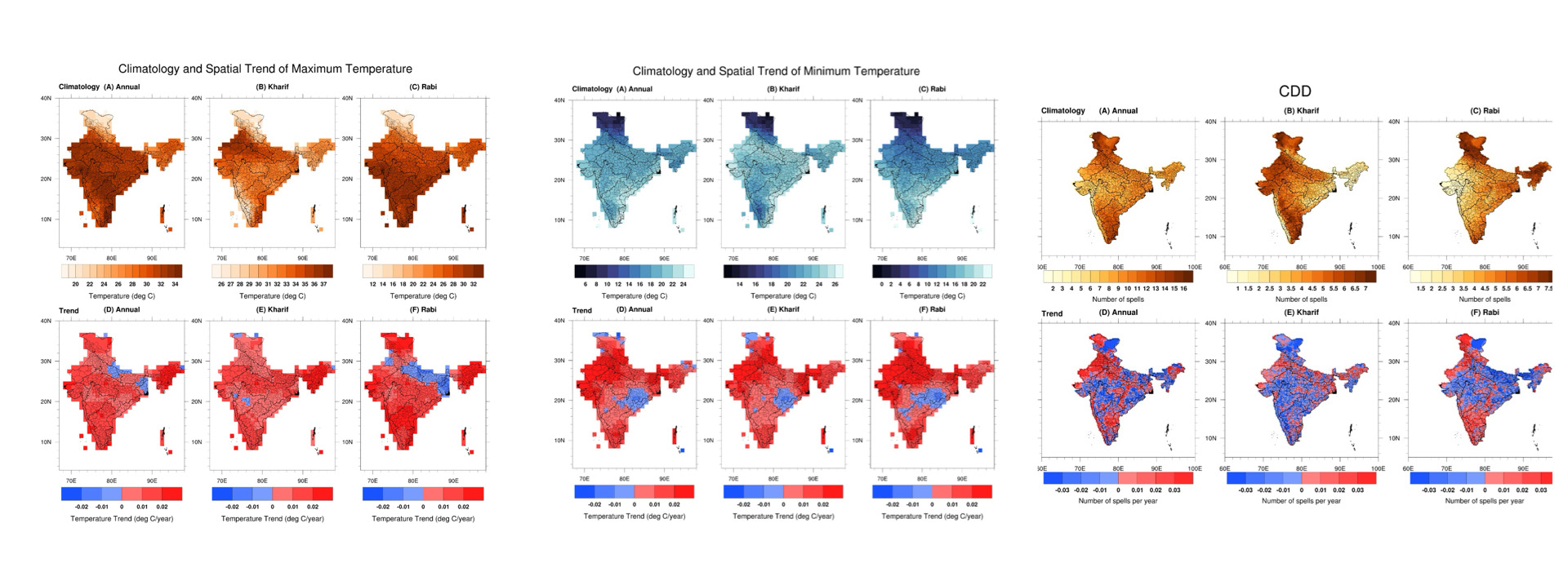
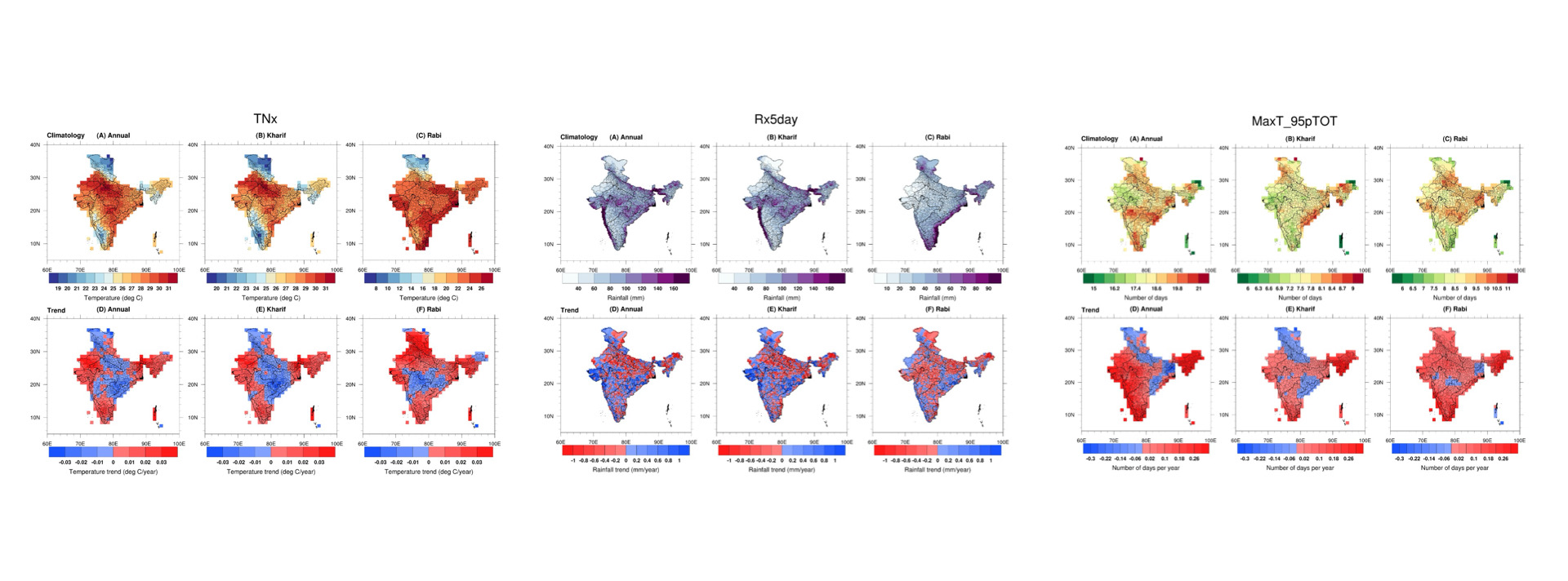
Indian rice production is highly water-intensive and is exposed to excessive rainfall and prolonged droughts. Producing a single kilogram of rice requires 1,500–5,000 litres of water (Surendran et al., 2021), straining local resources. However, farming techniques such as direct seeding can reduce water use by 30–40% (European Chemical Industry Council, 2024). The following maps show that key rice-growing states such as Telangana, Uttar Pradesh, West Bengal, and Punjab are already experiencing hotter days and nights, along with shifts toward either very wet days or longer dry periods. These pressures disrupt the value chain: floods from extreme rainfall can damage crops during sowing or harvest, while prolonged dry spells strain irrigation systems and deplete groundwater. These trends reduce overall water availability, hamper plant growth, and drive yield losses. Climate models project a 6–10% decline in national rice production by 2050, posing a direct threat to food security and affordability (Mohapatra et al., 2024).
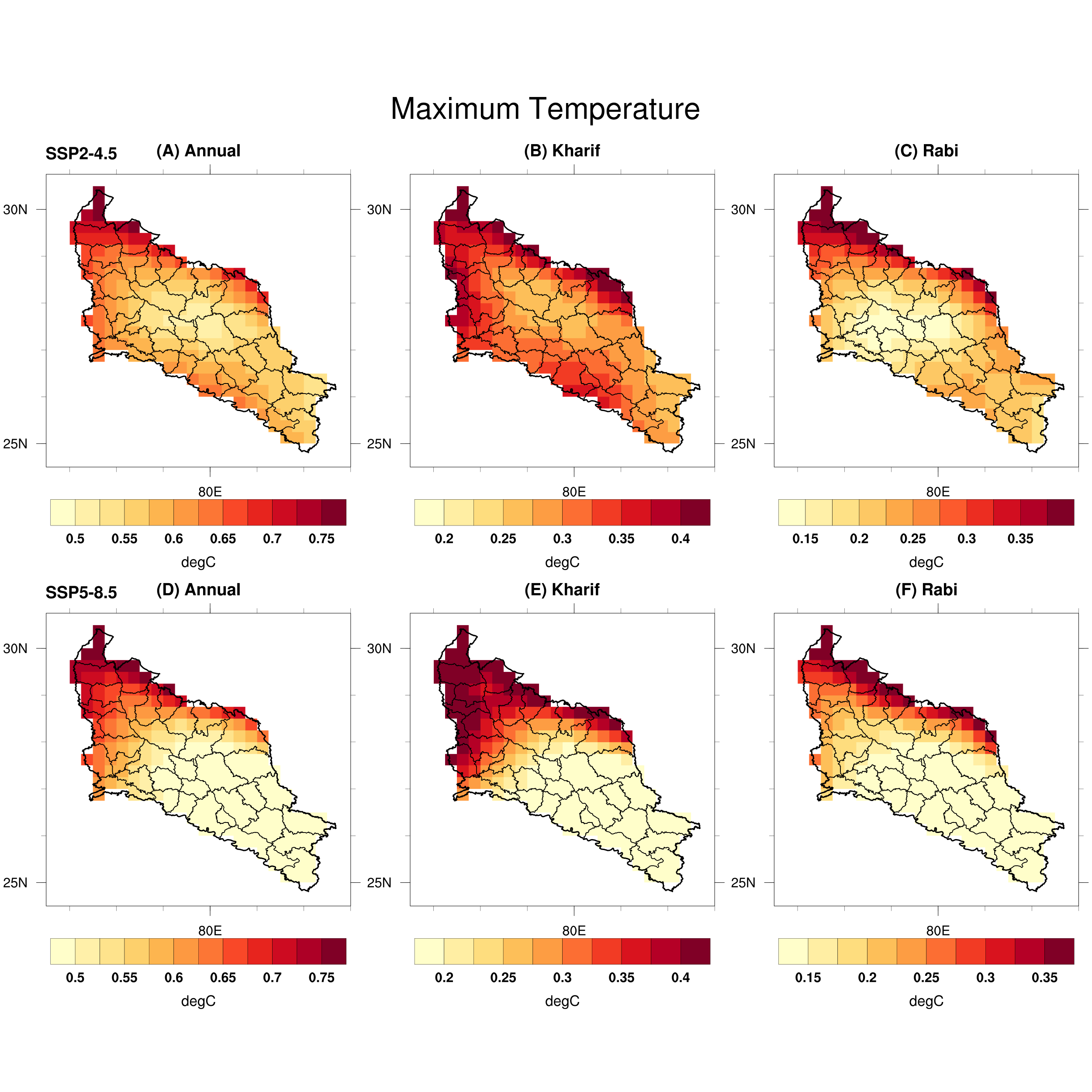
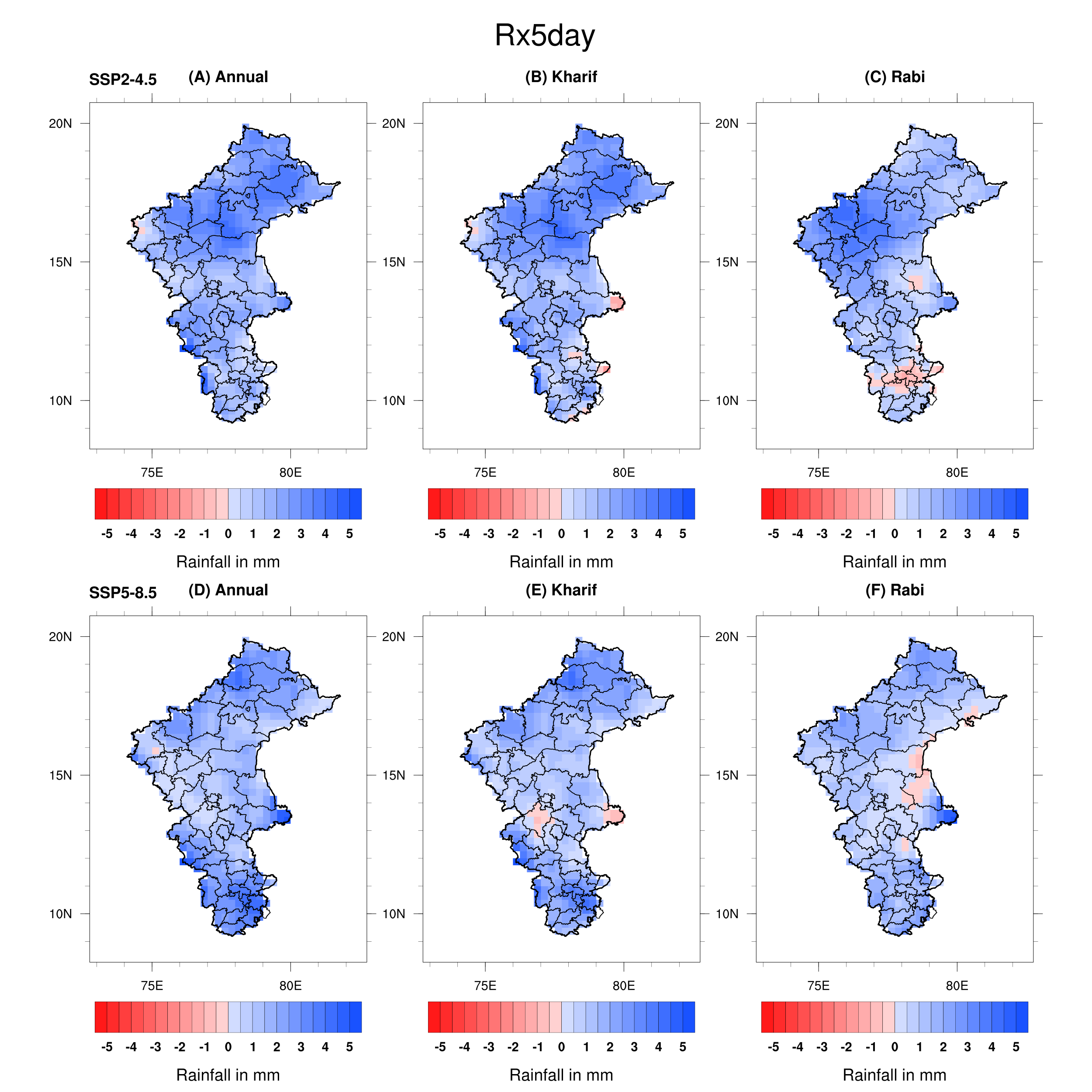
The second set of charts indicates that over the next 30 years, in both the moderate- and high-emissions scenarios, warmer conditions with intense rainfall are expected in states such as Uttar Pradesh. These swings increase the chance of crop damage and failed seasons. This is why studies project that, unless farmers adapt to climate change, rice yields could decline by up to 35% by 2050 (Singh et al., 2024) and agricultural revenue could decrease by 17–20% (Mohapatra et al., 2024).
Policy measures exist, but are not supportive enough
Several government initiatives now seek to cushion India’s rice farmers from these shocks. First, the PMKSY expands irrigation access and water-use efficiency by promoting “more crop per drop” through micro-irrigation and restoring the irrigation potential of over 4 lakh ha, easing the pressure on groundwater during drought periods (Jadhav et al., 2025). Second, climate-resilient rice research, led by the National Institute of Climate Resilient Agriculture (NICRA) and the Indian Council of Agricultural Research (ICAR), is advancing drought- and flood-tolerant varieties (Indian Council of Agricultural Research–National Rice Research Institute, 2019) and adaptive practices such as direct seeding and alternate wetting/drying. The FMBAP focuses on strengthening embankments to ensure emergency water storage and on protecting rice belts following extreme events (Ministry of Water Resources, River Development and Ganga Rejuvenation, 2024). Breakthroughs in genome editing that led to the development of rice varieties demonstrating heat and drought tolerance, such as Pusa DST Rice 1 and DRR Rice 100, were announced in 2025, promising direct benefits for rice farmers facing climate stress (Jigeesh, 2025).
However, farmers continue to face extreme weather shocks. Their impact is exacerbated by delayed insurance payouts, including under PMFBY, which burden farmers with mounting debt and force them to resort to distress sales (Smail, 2025). Access for remote smallholders remains limited, as governmental infrastructure has not expanded sufficiently to cover vulnerable rice belts. To secure India’s rice future, climate-smart technologies must scale faster, insurance payouts and resilience infrastructure development must be accelerated, and outreach efforts must target uneven and diverse geographies.
What are the solutions to address these challenges?
As climate risks grow, India’s response must operate across the finance, agriculture, and markets ecosystems by linking finance, technology, and research to deliver climate-ready support.
- Parametric insurance—which uses satellite data to trigger payouts, and is currently being piloted in selected districts (Sen et al., 2025)—must be scaled nationally so that compensation reaches farmers when the weather crosses set thresholds, rather than months after a claim.
- With the National Bank for Agriculture and Rural Development’s support, banks and microfinance institutions can incentivise climate-resilient practices by making them part of credit requirements. This can expand initiatives such as the National Innovations in Climate Resilient Agriculture (2011) and systems of rice intensification, thereby enhancing adaptive capacity (Farmonaut, 2025).
- Supporting ground resilience, such as the use of drought-tolerant seeds, efficient irrigation, and rotation with fish culture (Agunbiade et al., 2025) (a technique observed in Indonesia and Odisha’s 2018 Krushak Assistance for Livelihood and Income Augmentation programme), can give farmers more options.
- Expanding the limited use of warehouse-receipt finance (Höllinger et al., 2013) and credit tied to local storage can help farmers avoid distress sales by letting them hold on to their grain and sell when prices recover.
- At a local level,[2] stronger producer organisations and cooperatives can aggregate smallholders’ demand for insurance, storage, and inputs, thereby lowering costs and improving farmers’ bargaining power in volatile markets (Sen et al., 2025).
- At a market level, private and public carbon credit programmes such as CleanRise and Varaha can financially reward farmers for switching to climate-smart practices such as alternate wetting and drying, which not only improve paddy yields but also reduce emissions.
- Scaling up and adapting India’s early rice-straw pilots—which focus on converting agricultural waste into biochar and energy (Confederation of Indian Industry, 2022)—into local hubs could help farmers earn an income from agricultural residues, improve soil moisture retention, and unlock carbon revenues in major rice belts.
Thus, sustainable transformation hinges on coordination across domains and the adoption of globally and state-tested strategies to transform agri-finance into a proactive guardrail for rural prosperity.
By Janhavi Bhujabal, Consultant, Climate and Sustainability Initiative (CSI). Views expressed are personal.
Footnotes
[1] The report estimates that climate impacts could cause up to USD 3 billion in annual losses in India’s rice sector by 2030, equivalent to roughly 5–7% of the projected sector value.
[2] The 2025 report Role of Agricultural Cooperatives in Enhancing Credit Access, Market Information and Smart Farming among Rural Farmers in Kerala by the Review of World Agriculture and Environment shows that when cooperatives pool member demand for inputs and services, it reduces transaction costs and improves farmers’ bargaining power in markets.