Nature-based solutions (NbS) aim to provide cross-sectoral solutions to address the challenges presented by biodiversity loss and nature conservation while serving multiple objectives of building social and ecosystem resilience to climate change. In the first article of this series, we explained the significant progress achieved in mainstreaming NbS over the years. Scaling wider adoption of NbS will require significant investments, both public and private. However, despite gaining momentum in international and domestic public and business policy discourse, finance flows to NbS remain limited and fragmented. In this article of the series, we therefore highlight the stylised facts about financing NbS – the funding requirements, the nature and extent of finance flows, and the instruments in use.
How much finance is needed for scaling NbS?
Though various global estimates focused on broader biodiversity[1] finance requirements are available (Figure 1), specific assessments of funding requirements and flows for NbS are limited. The latest estimates from the State of Finance for Nature (UNEP, 2023) report indicate the need for ~USD 436 billion in finance flows towards NbS by 2025 and ~USD 542 billion by 2030 to meet the Rio Convention targets.[2]
Figure 1. Selected global estimates of biodiversity finance requirements Sources: Deutz et al. (2020), GBF (2022), and UNEP (2023).
In contrast to the significant financing requirements, the actual financial flows to the NbS are abysmally low. For instance, Deutz et. al. (2020) estimated a meagre spending of USD 0.8–1.4 billion per year on NbS in 2019, but with a potential to increase flows to USD ~25–40 billion per year by 2030. The Global Environment Facility (GEF), so far, has invested USD 6.2 billion between 2010-2024 in NbS-aligned projects (GEF, 2025).[3] The State of Finance for Nature (UNEP, 2023) reported annual financial flows of just USD 200 billion towards NbS in 2022.
Finance for NbS is highly fragmented (UNEP, 2023). NbS are largely public financed (~82% of total annual finance flows). A large proportion of public funding for NbS is directed towards protecting biodiversity (~46%), followed by sustainable agriculture, forestry, and fishing (~25%). In contrast, private finance mainly flows into biodiversity offsets and credits (~33%), followed by sustainable supply chains (~25%).
Nevertheless, global efforts are underway to channel more private finance to NbS. Recent examples may include the Asian Development Bank’s (ADB) Nature Solutions Finance Hub for Asia and the Pacific, launched at COP28,[4] which aims to attract at least USD 2 billion in private finance for NbS (ADB, 2023). The ADB has also issued its first biodiversity and nature theme bond, valued at USD 100 million in 2024, to finance eligible projects across Asia and the Pacific (ADB, 2024). The European Commission has announced its road map for establishing nature credits this year, incentivising private investments in nature-positive actions (European Commission, 2025). The Tropical Forest Forever Facility – proposed during Brazil’s G20 Presidency in 2024 to mobilise USD 125 billion via blended finance structures – will be launched at COP30 in November this year (United Nations Climate Change, 2025).[5]
Multiple financing instruments are used for financing NbS. These include payments for ecosystem services, credit guarantees, debt-financing instruments such as green bonds, debt-for-nature swaps, impact investing, and performance-based contracts such as social impact bonds and sustainability-linked bonds (Brasil-Leigh et al., 2024). The adoption and suitability of these instruments depend on various factors, such as instrument design, measurement, monitoring and verification costs, and policy priority and relevance in the national context. For instance, the Organisation for Economic Co-operation and Development’s ‘Policy Instruments for the Environment’ (PINE) database shows that only 28 countries have active payments for ecosystem service programmes in 2024.
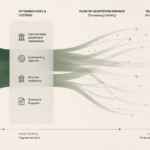
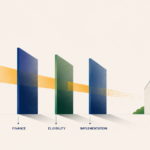
Blended finance is increasingly recognised as a catalytic mechanism to de-risk private investments in NbS. Alongside co-financing models based on public–private partnerships, blended finance has emerged as a widely discussed mechanism for scaling private finance for NbS, by strategically using concessional capital to improve risk-adjusted returns (UNEP, 2023). Some of the major initiatives implementing blended finance structures include the Global Fund for Coral Reefs, the Legacy Landscapes Fund, the Green Fund, the Blue Natural Capital Financing Facility, and the Resilient Landscapes Fund. While blended finance instruments do offer improvements in the risk–return profile of private investments, they are not completely devoid of implementation challenges; thereby, they need an enabling environment for scaling up (WEF, 2023). The important question, therefore, which often arises is at what stages of financing for NbS, different financiers may step in under the blended finance arrangements.
Why are NbS under-capitalised then?
An estimate by the World Economic Forum (WEF, 2020) suggests that channelling USD 2.7 trillion into annual capital investments until 2030 can help scale systemic transitions to unlock USD 10 trillion in nature-positive[6] business opportunities and 395 million jobs by 2030. Key structural and operational challenges, however, continue to impede the bankability and/or scalability potential of NbS, resulting in lower private finance flows. For instance, one of the key challenges in designing NbS is mainstreaming natural capital in the economic activities and financial decisions of stakeholders and the impact assessment on society and natural capital.
Some of these challenges and the actions taken to address them will be unpacked in the final part of this series.
By Honey Karun, Economist, Climate and Sustainability Initiative (CSI). Views expressed are personal.
Endnotes
[1] For a detailed explanation of why biodiversity matters, see Kunming–Montreal Global Biodiversity Framework (GBF). (2022).
[2] The Rio Convention targets refer to the goals and commitments arising from the three major environmental treaties adopted at the 1992 Earth Summit in Rio de Janeiro, Brazil, to address climate change, biodiversity loss, and desertification. The three treaties were the United Nations Framework Convention on Climate Change, the Convention on Biological Diversity, and the United Nations Convention to Combat Desertification.
[3] These investments are inclusive of total project financing, project preparation grants (PPG), and fees.
[4] The 28th United Nations Climate Change Conference, Dubai, United Arab Emirates, November 30 to December 12, 2023.
[5]The facility is now also endorsed by the BRICS Leaders’ Framework Declaration on Climate Finance at the 17th BRICS summit held in Rio de Janeiro in July this year (BRICS Brasil, 2025).
[6] A nature-positive approach enhances the resilience of ecosystems and society in halting and reversing nature loss.
References
ADB. (2023, December 4). ADB and partners launch Nature Financing Initiative for Asia and the Pacific (Asian Development Bank news release). https://www.adb.org/news/adb-and-partners-launch-nature-financing-initiative-asia-and-pacific
ADB. (2024, October 29). ADB issues its first biodiversity and nature bond (Asian Development Bank news release). https://www.adb.org/news/adb-issues-its-first-biodiversity-and-nature-bond
Brasil-Leigh, A., Byrd, R., Käfer, P., Miao, G., Ruiz-Sierra, M., Vieira, A., & Wallock. W. (2024). Toolbox on financing nature-based solutions. Climate Policy Initiative. https://www.climatepolicyinitiative.org/wp-content/uploads/2024/09/Report-Toolbox-on-Financing-Nature-Based-Solutions.pdf
BRICS Brasil. (2025). Leaders’ framework declaration on climate finance. https://brics.br/en/documents/presidency-documents/2507_brics_leaders-framework_declaration-on-climate-finance.pdf
Deutz, A., Heal, G. M., Niu, R., Swanson, E., Townshend, T., Zhu, L., Delmar, A., Meghji, A., Sethi, S. A., & Tobinde la Puente, J. (2020). Financing nature: Closing the global biodiversity financing gap. The Paulson Institute, The Nature Conservancy, and the Cornell Atkinson Center for Sustainability. https://www.paulsoninstitute.org/wp-content/uploads/2020/10/FINANCING-NATURE_Full-Report_Final-with-endorsements_101420.pdf
European Commission. (2025, July 7). Nature credits roadmap to reward nature-positive action and boost private finance (European Commission press release). https://ec.europa.eu/commission/presscorner/detail/en/ip_25_1679
Global Environment Facility (GEF). 2025. Evaluation of the GEF support for nature-based solutions. GEF/E/C.69/04, May 5, 2025. Independent Evaluation Office, 69th GEF Council Meeting, GEF. https://www.thegef.org/sites/default/files/documents/2025-05/EN_GEF_C69_E_04_GEF_Support_for_NbS_May5_2025.pdf
Kunming–Montreal Global Biodiversity Framework (GBF). (2022). Target 19, Kunming–Montreal Global Biodiversity Framework. https://www.cbd.int/gbf/targets/19
United Nations Environment Programme (UNEP). (2023). State of finance for nature: The big nature turnaround – repurposing $7 trillion to combat nature loss. United Nations Environment Programme, Nairobi. https://doi.org/10.59117/20.500.11822/44278
United Nations Climate Change. (2025, July 28). BRICS leaders endorse unprecedented fund for conservation of tropical forests. https://cop30.br/en/news-about-cop30/brics-leaders-endorse-unprecedented-fund-for-conservation-of-tropical-forests
World Economic Forum (WEF). (2020). The future of nature and business (New Nature Economy Report II). World Economic Forum, Geneva. https://www.weforum.org/publications/new-nature-economy-report-ii-the-future-of-nature-and-business/
WEF. (2023, August 31). 3 Conditions that will help scale blended finance for nature-positive outcomes (World Economic Forum newsletter). https://www.weforum.org/stories/2023/08/3-conditions-to-help-scale-blended-finance-for-nature-positive-outcomes/