In today’s climate-conscious world, it’s no longer enough for brands to just “look green”; they’re also expected to be and sound purpose-driven. Climate storytelling is everywhere: sustainability reports, green-labelled products, bold brand campaigns. But is all of it meaningful? Or are we simply witnessing a shift from greenwashing to a more nuanced tactic—storywashing?
The truth is: a strong story alone isn’t enough anymore. What matters is whether that story is grounded in real action.
From Greenwashing to Storywashing: What’s the Difference?
- Greenwashing = pretending to be eco-friendly through misleading claims. Example: a bottled water company markets its product in bright green packaging with the label “100% eco-friendly,” even though the bottle is made from virgin plastic and has no certified reduction in environmental impact.
- Storywashing = telling inspiring, values-driven stories without matching action. The story itself may not be false, but it hides a gap between brand messaging and reality. Examples:
– A fashion brand campaigns about women artisans while underpaying its supply chain workers
– A fast-food chain promotes “local sourcing” videos while expanding carbon-heavy operations
Both sound good. But both lack the substance needed to back the story.
What’s Really at Stake?
Brands today face pressure from all sides—consumers, investors, regulators- to not just say the right thing, but do the right thing. Sustainability is no longer a peripheral CSR activity; it has become a strategic boardroom priority. With this shift, the gap between narrative and action is under sharper focus. While greenwashing—misleading claims about sustainability—is familiar territory, a subtler challenge has emerged: storywashing. It relies on feel-good, emotive messaging where the action behind it is thin or non-existent. What’s truly at stake here is credibility—brands that blur the line between narrative and reality risk losing public trust, investor confidence, and long-term reputation.
We’ve seen this play out across industries: from fast-fashion labels criticised for their “conscious” collections while fuelling mass production, to food companies promoting “farm-fresh” imagery while relying on industrial supply chains. Such gaps don’t just trigger social media backlashes; they can invite regulatory scrutiny, investor caution, and a steep decline in customer loyalty. In an age of transparency, that loss can be far more damaging than silence.
Both approaches erode trust. And in a crowded attention economy, once trust is lost, it’s hard to win back.
Why Storywashing Persists in Climate Communication
We live in a crowded attention economy. Brands compete for attention, and stories connect fastest with people. But if stories aren’t backed by real change, they become a mask. It’s worth noting that ‘not all storytelling is storywashing’. When done with transparency, even storytelling that acknowledges a company’s shortcomings can foster trust. The issue arises when storytelling becomes a substitute for strategy.
Consumers Are Catching On
Today’s consumers are more informed, more connected, and far less forgiving of superficial claims. Gen Z (born between 1997 and 2012), in particular, is sceptical of brands that talk values without demonstrating them. They are not just looking for low-carbon credentials; instead, they want consistency, transparency, and accountability across a brand’s behaviour.
In a time when consumers are more informed, connected, and vocal than ever, performative storytelling is risky. The backlash can be swift, particularly when watchdog platforms and climate influencers call out brands online. Once trust is lost, even genuine efforts can be viewed with cynicism. And it’s not just consumers who are watching—regulators are beginning to penalise misleading claims, while investors are exercising greater caution toward companies that fail to align their stories with verifiable action.
The Credibility Checklist for Climate Communicators
As communicators, how do we navigate this space with integrity? Here’s a practical guide to help ensure your climate messaging stays grounded in reality while still inspiring action.
- Start with Proof, Not Poetry
Before crafting the narrative, gather the numbers. Data, third-party audits, and verifiable case studies form the bedrock of credibility. For instance, instead of saying “we cut emissions,” show the verified year-on-year reduction - Focus on What’s Material
Not all sustainability stories deserve equal airtime. A good communicator knows to spotlight areas where the brand has the most significant impact, even if they’re not the most glamorous. For example, a textile brand can focus on reducing water usage across its supply chain, not just showcasing recycled packaging - Put People at the Centre
Sustainability isn’t just a corporate story; it’s a human one. Bring in voices from workers, frontline communities, or supply chain partners. A solar company documenting the experiences of local households benefiting from clean energy—transforming an infrastructure update into a story about empowerment and access - Embrace Imperfection
Sustainability is a work in progress, so while we share the wins, we should also highlight the challenges, as people do expect honesty and sharing setbacks and lessons builds credibility. For instance, an apparel brand publicly acknowledging that it fell short on its renewable energy targets, and laying out a detailed corrective action plan. This transparency is likely to build more trust than a flawless campaign could - Prove It’s Not Just a Marketing Campaign
Climate communication shouldn’t be a siloed function. Is sustainability reflected in your R&D, HR policies, and procurement? For example, a tech company can embed sustainability KPIs into its company-wide performance metrics, signalling total alignment from leadership to operations - Don’t Hero-Wash
Avoid casting your brand as the lone saviour. Instead, celebrate partnerships, coalitions, and community-led efforts. A clean-up campaign where the brand chooses to shift the spotlight from itself to the local women’s collective that led the drive, highlights shared ownership and systemic change
Lessons from the Field
Iro Iro (Jaipur): Turning Waste into Sustainable Craft
Iro Iro, a social enterprise based in Jaipur, collaborates with local artisans to repurpose fabric scraps from fashion brands and hotels into sustainably designed clothing. Since its inception, the brand has diverted over five tonnes of textile waste from landfills by upcycling it into traditional yet contemporary garments. Not only does Iro Iro promote zero-waste fashion, but it also empowers rural communities, especially women, by providing fair wages and preserving craft heritage. This initiative showcases the kind of authenticity we should champion: solutions that merge impact, innovation, and traditional livelihoods. (Vogue, 2022)
Iro Iro’s storytelling isn’t just poetic; it’s actionable, measurable, and community-centred.
When Saying ‘Don’t Buy This Jacket’ Actually Worked
In the wake of the 2008 recession, consumers in the United States (US) were becoming more frugal and were choosing value, durability, and purpose over impulse purchases. Sensing this shift, Patagonia took an unconventional route in 2011. During the peak holiday shopping season, it ran a striking full-page ad in The New York Times that read: “Don’t Buy This Jacket.” The ad highlighted the environmental impact of one of Patagonia’s best-selling fleece jackets—its water use, energy footprint, and material waste. The company urged customers to rethink consumption and, if possible, choose second-hand Patagonia gear instead. The message wasn’t just bold; rather, it was backed by the brand’s long-standing commitment to circularity and repair.
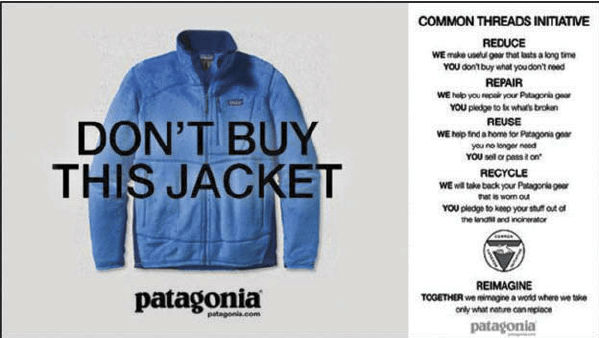
Contrary to typical marketing expectations, Patagonia’s honesty deepened trust. The campaign struck a chord, and sales surged by nearly 30% in 2012, taking revenue to $543 million, followed by steady growth in the years ahead. By 2017, Patagonia had crossed $1 billion in annual revenue (Investopedia, 2023).
This wasn’t greenwashing. It was bold, clear storytelling that put values before profits and was rewarded with long-term brand equity.
A Better Way Forward for Brands
Storytelling is a powerful tool to drive awareness, action, and alignment on climate goals. But in a world where climate urgency is rising, storytelling must serve as a substance. Climate storytelling is only as strong as the action behind it; hence, the brands must move beyond optics. Climate Communicators have a vital role to play in this transition. Not just by amplifying good stories but by asking hard questions, pushing for alignment, and ensuring that our narratives reflect reality. This checklist is not a content calendar; it’s a compass. We can use it to steer the brand’s story toward something more meaningful because, in climate communication, truth is not a buzzword; it is and should be the baseline.
By Junisha Kaul, Media & Communications Specialist, Climate and Sustainability Initiative (CSI). Views expressed are personal.
References
(2023). Greenwashing.
https://www.investopedia.com/terms/g/greenwashing.asp
The Sustainable Agency. (2023). How to Tell a Sustainability Story You Can Stand Behind
https://sustainablebrands.com/read/sustainability-story-stand-behind
(2022). What is greenwashing?
https://www.britannica.com/video/what-is-greenwashing/-330799
Claus, J. (2023). Explaining the term – Storywashing. LinkedIn.
https://www.linkedin.com/posts/jasper1camera_green-washing-green-hushing-pink-washing-activity-7323657485821616129-5Q0i/
Vogue India. (2022)
https://www.vogue.com/article/iro-iro-india-reimagining-waste-while-preserving-traditional-craftsmanship
Sustainable Brands. (2022). Patagonia Launches ‘Responsible Economy’ Campaign
https://sustainablebrands.com/read/patagonia-launches-responsible-economy-campaign
Clear Tax (2025). BRSR Reporting in India: Full Form, Applicability, Format, Guidelines, Benefits
https://cleartax.in/s/brsr-reporting